

Vode Study
Exciting Research News from The NMH: The VODE Study (Video Or Direct laryngoscopy for urgent Endotracheal intubation in newborn infants)
We are excited to share the results of the VODE Study, led by Dr. Lucy Geraghty. This important research focuses on improving how we help newborn babies breathe.
Why is this important?
Many newborn babies need breathing support, some of whom are intubated for ventilation. When a baby is intubated, clinicians insert a tube into their windpipe (trachea). This is a tricky procedure to perform and doctors often need more than one attempt to do it successfully. Repeated intubation attempts in newborn babies are associated with more of adverse events, including falls in their oxygen levels, slowing of their heart rate and oral trauma. Traditionally, doctors use a standard laryngoscope to look directly into babies’ mouths to identify the entrance to their trachea. More recently, video laryngoscopes have been developed. Video laryngoscopes use a camera to show a view of the entrance to the trachea on a screen, which doctors look at when attempting intubation.
What is the VODE Study?The purpose of Dr. Geraghty’s study (the VODE study) was to find out whether doctors had more success at the first intubation attempt when they looked at the screen of a video laryngoscope compared to when they looked directly into the mouth. The aim of this randomised clinical trial was to investigate if one laryngoscope led to higher rates of success at the first intubation attempt, compared to the other. This was a question that had not yet been answered through neonatal research. The study has been completed, and we are thrilled to share the results with you.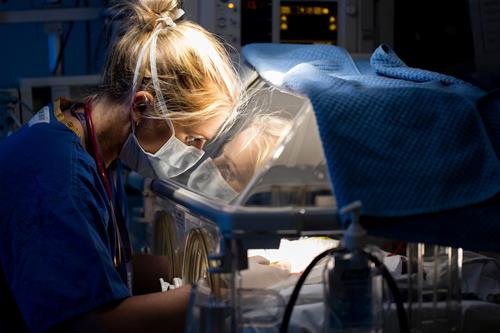 How was the study conducted?
The trial involved 214 newborn babies of various gestational ages who were intubated in the delivery room or neonatal intensive care unit (NICU). These babies were randomly assigned to intubation with either a video or direct laryngoscope. The team determined which method was best more successful by comparing the rates of success at first attempt for each method.
What were the results?
The study found 74% were successfully intubated on the first attempt using video laryngoscopy compared to 45% with direct laryngoscopy. This means that video laryngoscopy is more effective for urgent intubation in newborns.
How will this benefit patients/affect clinical practice?
The team discovered that using video laryngoscopy increases the chance of newborns being successfully intubated at first attempt, and thus may reduce the risk of adverse events. The results of this important study have been published in the New England Journal of Medicine, the most highly ranked medical journal worldwide, and will change clinical practice internationally. This may help to improve the outcomes of newborn babies undergoing intubation worldwide.
Dr. Geraghty highlights that The NMH, as a university teaching hospital, integrates research into daily practice to continually improve care. The team are grateful to the families who consented to having their babies included in the trial, and for the support of NMH staff, so we can continue to improve the clinical care of newborn babies based on scientific evidence. Babies born in research centres of excellence like The National Maternity Hospital tend to have better long-term health outcomes, which is truly remarkable!
We are proud at the Foundation of this achievement and look forward to continuing our efforts to help babies thrive, arrive and survive. Thank you for your ongoing support for research projects at The NMH.